
What are the options when someone with HIV can no longer live independently?
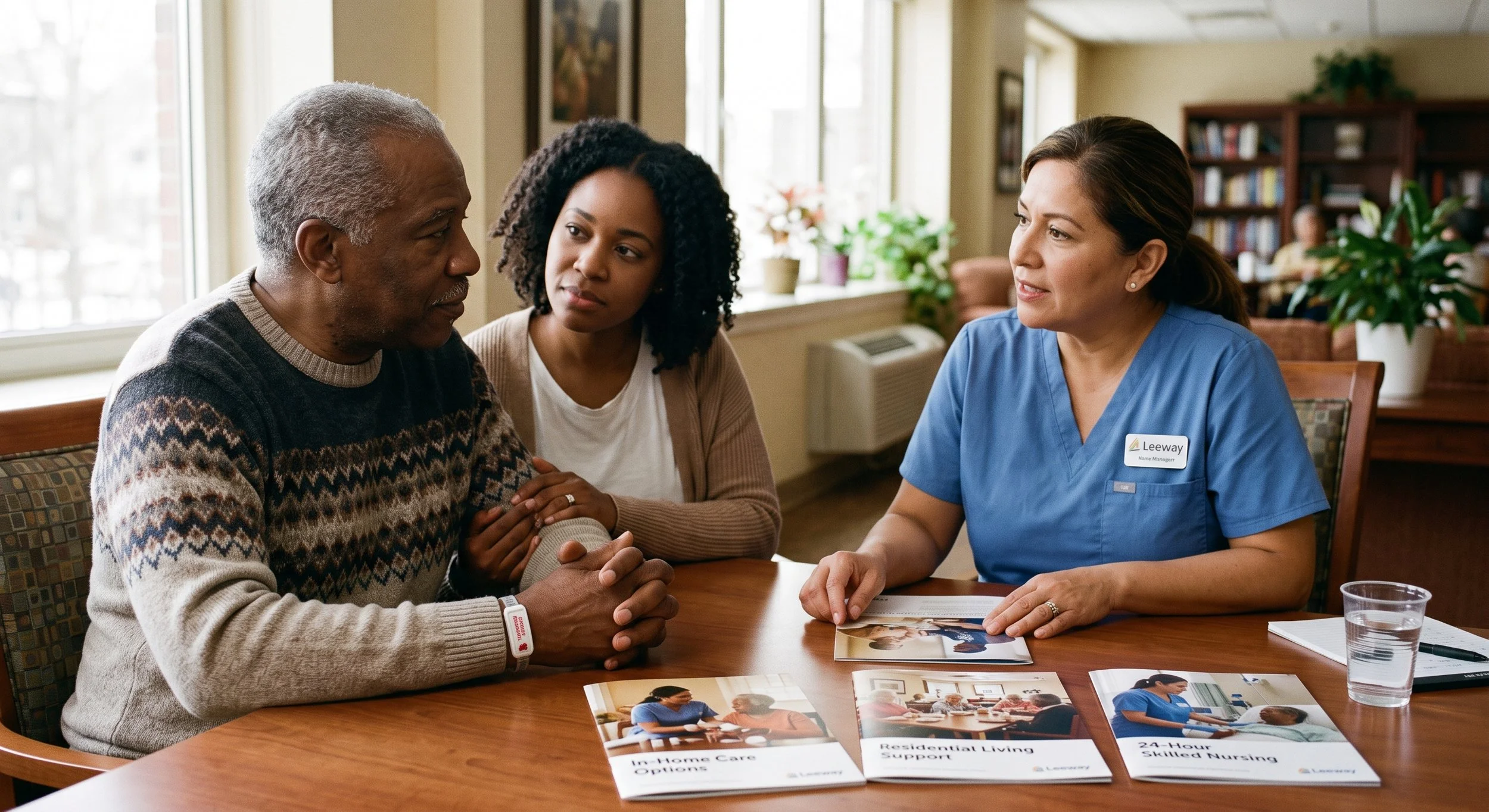
When someone with HIV can no longer live independently, the right care setting depends on several factors. These include their medical needs, ability to manage daily activities, safety, and the support available at home.
Options may include in-home care, permanent supportive housing, residential care, or skilled nursing care. Understanding these differences can help families and caregivers choose the right level of support.
It can also help individuals maintain their dignity, stability, and quality of life. The best option is not always the most intensive one. Someone who needs help with medications and daily routines may benefit from residential care.
Those with complex medical needs may require 24-hour skilled nursing. Others may remain in their own home with appropriate support. A careful assessment can help determine which setting provides enough assistance without unnecessarily limiting independence.
Care Options for Someone with HIV Who Cannot Live Independently
Care options for someone with HIV who can no longer live independently generally include in-home care, supportive housing, residential care, and skilled nursing care.
The right choice depends on the person’s health and daily care needs. Housing, safety, medication management, and appointment support should also be considered. HIV care has also changed significantly over time.
Many people living with HIV manage their condition long-term. However, other health, behavioural health, or social needs may make living alone more difficult. A suitable care setting should address those needs while supporting as much independence as safely possible.
How Do the Main Care Options Compare?
The following comparison can help families understand the differences between common care settings. The amount of medical care, supervision, and daily assistance varies by provider and location.
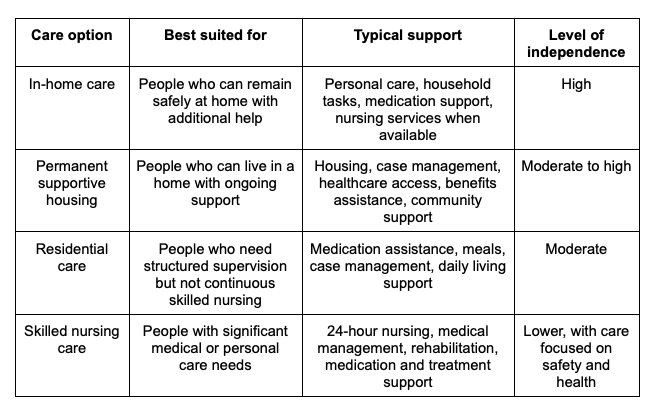
The goal is to match the setting to the person’s current needs. Care needs can also change, so a person may move from one level of support to another over time.
When is In-Home Care Appropriate for Someone With HIV?
In-home care may be appropriate when a person can remain safely at home but needs assistance with specific health or daily living tasks. This option can allow someone to remain in familiar surroundings while receiving additional support.
What Can In-Home Care Provide?
Home-based services can vary based on the person’s needs and provider. They may include help with bathing, dressing, meals, transportation, household tasks, and medications. Home health services may also provide certain clinical care when ordered and available.
The National Institute on Aging notes that home-based services can include assistance with medications, wound care, medical equipment, and physical therapy. The exact services available depend on the person’s needs and local resources.
When May Home Care no Longer be Enough?
Home care may become difficult when someone needs frequent supervision or cannot safely manage medications. It may also be less suitable when they have recurring medical complications or require care day and night.
It may also become challenging when family caregivers cannot provide the amount of assistance required. At that point, families may need to consider a more structured setting that can provide consistent support.
What is Permanent Supportive Housing for People with HIV?
Permanent supportive housing combines stable housing with ongoing services that support health, safety, and housing stability. It can help people who do not need 24-hour nursing but benefit from regular support and case management.
Unlike a nursing facility, supportive housing allows residents to maintain their own homes. Services may include case management, healthcare access, counselling, benefits assistance, and help with daily challenges.
Leeway provides permanent supportive housing for individuals and families in Greater New Haven who are experiencing or at risk of homelessness. Supportive housing may benefit people who can manage many daily activities but need reliable assistance to remain stable.
What is Residential Care for Someone with HIV?
Residential care provides a supervised living environment for people who need more daily support than supportive housing. It can offer greater structure without the level of medical care provided by skilled nursing.
Services may include medication assistance, meals, housekeeping, personal support, case management, and supervision. Leeway’s Residential Care Home is a licensed 30-bed facility in New Haven. It also provides access to mental health, dental, vision, and substance use treatment services.
Residential care may suit someone who is medically stable but needs help with medications, appointments, meals, or daily routines. It can also support residents in maintaining community connections and working toward greater independence when appropriate.
When is Skilled Nursing Care Needed?
Skilled nursing care may be appropriate when someone needs ongoing medical supervision or help with complex health and personal care needs. It provides more clinical support than supportive housing or residential care.
Skilled nursing can include 24-hour nursing, medication management, rehabilitation, wound care, and help with daily activities. For people living with HIV, specialized care can also support complex chronic health needs.
Leeway provides long-term skilled nursing for adults living with HIV/AIDS who need ongoing clinical support. Services include HIV care, chronic condition management, behavioural health support, and help with daily activities.
How Can Families Decide Which Level of Care Is Appropriate?
Choosing care should begin with the person’s actual needs rather than the name of a particular facility. A healthcare professional, social worker, case manager, or care team can help assess the person’s needs. They can determine whether the person can safely remain at home or needs a more structured setting.
Consider Medical Needs
Start by considering medication management, mobility, wound care, chronic conditions, rehabilitation needs, and frequency of medical appointments. Someone who needs continuous nursing care may require a more structured setting. Those who mainly need help with daily routines may need less intensive support.
Consider Daily Living Needs
Look at whether the person can safely bathe, dress, prepare meals, manage medications, use transportation, and maintain a safe living environment. Difficulty with several of these activities may indicate the need for additional support.
Consider Housing and Financial Stability
Housing insecurity can make independent living much harder. Benefits, disability assistance, Medicaid eligibility, and other resources may affect which options are realistic. Leeway’s case management services help residents and supportive housing tenants access healthcare and housing support. They also assist with disability benefits, Medicaid, and other social services.
Consider the person's preferences.
The individual should be involved in the decision whenever possible. Discussing privacy, location, daily routines, and community connections can help identify the right care setting. Personal preferences and the desired level of independence should also be considered.
Can Someone Move Between Different Levels of HIV Care?
Yes. A person’s care setting can change as their health and circumstances change. Someone may receive skilled nursing care after hospitalization. They may later move to residential care and eventually transition to supportive housing as they become more independent.
This care continuum can reduce unnecessary disruption. Leeway offers skilled nursing, residential care, supportive housing, and case management. This allows people to access different levels of support within one organization.
The goal is not simply to find a place for someone to live. The goal is to provide the right combination of healthcare, housing, supervision, and social support for their current situation.
What Should Families Ask Before Choosing a Care Setting?
Families should ask if the facility has experience caring for people living with HIV. They should also ask about medication management, chronic conditions, behavioural health support, and privacy.
It is also important to ask about staffing, medical services, transportation, meals, activities, emergency procedures, costs, eligibility, and how care plans are reviewed. If more support may be needed later, ask whether the organization offers other levels of care. You can also ask if they can help coordinate a transition.
A facility should also explain its admission and referral process clearly. For example, Leeway accepts referrals from hospitals, clinics, and physicians. Community agencies can also make referrals for skilled nursing care.
Find the Right HIV Care and Housing Support
When independent living is no longer safe or practical, families do not have to choose between complete independence and institutional care. Different levels of support can provide a safer and more stable path while respecting the person’s dignity and preferences.
Leeway brings HIV-focused skilled nursing, residential care, supportive housing, and case management together within a single continuum of care. For individuals and families in Greater New Haven seeking specialized support, explore Leeway’s HIV care and housing services.
Frequently Asked Questions
What if someone with HIV has both medical and housing needs?
A program that combines healthcare, housing, and case management may provide more coordinated support. This can reduce the need to manage multiple services separately and help address medical, financial, and housing needs together.
Can family members help with deciding on a care setting?
Yes. Family members can provide important information about daily routines, safety concerns, medication management, and changes they have noticed. The individual should remain involved in decisions whenever possible.
What should happen if a person’s care needs increase after moving into a program?
Families should ask how the organization handles changes in care needs. Some organizations may offer different levels of support or help coordinate a transition when a person requires more intensive services.
How can families prepare for a care assessment?
Families can prepare a list of medications, medical conditions, recent hospitalizations, daily activities the person needs help with, and current housing concerns. Bringing this information can help the care team understand the person’s needs more accurately.