
Connecticut HIV care and housing options: a decision guide

If you are searching for housing for HIV patients near me, programs that combine stable housing with integrated HIV medical care can provide the support you need. These services help individuals access healthcare, stay on treatment, and build long-term stability.
Safe and affordable housing is more than a place to live because it creates a strong foundation for better health and overall well-being. Many people also need case management, healthcare coordination, and supportive services to manage daily challenges successfully.
This guide explains the HIV housing options available in Connecticut, how integrated care works, and what to consider when choosing a program. It will also help you understand which housing solution may best fit your needs and how to take the next step toward support.
What are Housing Programs with Integrated HIV Medical Care?
Housing programs with integrated HIV medical care provide safe housing alongside healthcare and supportive services for people living with HIV. These programs combine housing, medical care, and support services to improve health and housing stability
Research consistently shows that people living with HIV who have stable housing are more likely to remain engaged in medical care. They are also more likely to take their medications as prescribed and achieve viral suppression. Stable housing also reduces barriers that often make it difficult to attend appointments or maintain consistent treatment.
Integrated programs often include HIV medical care coordination, case management, mental health counselling, substance use support services, and medication management. They may also provide benefits and insurance assistance to help individuals access essential resources.
Additional services can include nutrition support, transportation coordination, and employment and life skills resources. Instead of focusing only on housing, these programs recognize that long-term wellness depends on addressing medical, emotional, and social needs together.
Why does Stable Housing Matter for People Living with HIV?
Stable housing plays a critical role in HIV care because health outcomes are closely connected to living conditions. When people have reliable housing, they are better able to focus on their health instead of worrying about where they will sleep each night.
People experiencing housing instability often miss medical appointments and face interruptions in their medication. They may also experience increased stress and struggle to maintain healthy daily routines.
These barriers can affect both physical and emotional well-being. Housing programs that integrate HIV care help reduce these challenges. They make healthcare easier to access and maintain.
Some of the most important benefits include:
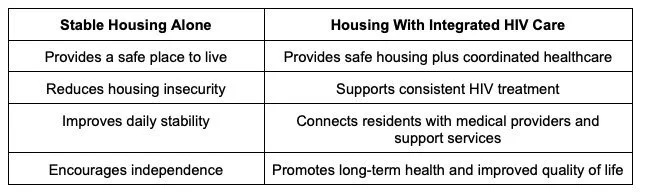
This combination of housing and healthcare creates a stronger foundation for lasting wellness than either service could provide on its own.
What Housing Options are Available in Connecticut?
Connecticut offers several housing options for people living with HIV, each designed to meet different levels of care and support. The right choice depends on an individual's health needs, financial situation, housing stability, and long-term goals.
Permanent Supportive Housing
Permanent supportive housing is designed for individuals who need long-term housing combined with ongoing supportive services. Residents receive stable housing with coordinated healthcare and support services. This option is often appropriate for individuals who have experienced chronic housing instability or have complex medical and social needs.
Transitional Housing
Transitional housing provides temporary accommodation while individuals work toward permanent housing. During this period, residents may receive case management, employment assistance, healthcare coordination, and support in developing independent living skills. Transitional housing can provide stability during periods of significant life change.
Independent Housing With Support Services
Some individuals are ready to live independently but still benefit from regular support. Programs offer case management, healthcare coordination, and referrals. They also support residents in maintaining independent living. This model works well for people who have stable health but still appreciate access to ongoing support when needed.
Emergency Housing Assistance
Emergency housing programs provide immediate short-term support for individuals facing homelessness or housing crises. Emergency housing is not intended as a permanent solution. It can help connect people with longer-term housing resources and medical care as quickly as possible.
How does Integrated HIV Care Improve Long-Term Health?
Integrated HIV care addresses the many factors that influence overall health. Instead of treating housing and healthcare as separate issues, providers work together to coordinate services. This approach supports every aspect of a person's well-being.
This collaborative approach often includes medical providers, case managers, behavioural health professionals, and housing specialists working toward shared goals. Some of the most significant advantages include:
Better Access to Medical Care
Individuals living in integrated programs often receive help scheduling appointments, arranging transportation, and communicating with healthcare providers. This reduces many of the practical barriers that prevent consistent medical care. Regular access to healthcare allows providers to monitor treatment progress and respond quickly if new health concerns arise.
Improved Medication Adherence
Taking HIV medication consistently is essential for maintaining health. Housing stability creates routines that make it easier to store medications safely and follow prescribed treatment plans. Support staff can also help residents overcome challenges that interfere with medication adherence.
Stronger Mental Health Support
Living with HIV may involve emotional stress, anxiety, depression, or social isolation. Integrated programs often include behavioural health services that build resilience and confidence. Mental health support strengthens overall wellness and encourages continued engagement in HIV care.
Coordinated Support Services
Housing programs often assist residents with benefits applications, transportation, nutrition resources, employment planning, and financial counselling. These services reduce everyday stress and allow individuals to focus on improving their health and achieving personal goals.
How can you Choose the Right HIV Housing Program?
Choosing among different housing programs requires careful consideration of your personal needs and long-term goals. Every individual's situation is unique, so the best program is one that matches both current circumstances and plans. When comparing available options, consider the following questions.
Does The Program Provide Medical Care Coordination?
Programs that coordinate healthcare alongside housing can simplify treatment and improve continuity of care. Ask how medical appointments, referrals, and communication with healthcare providers are managed.
What Support Services are Available?
Different housing programs offer different levels of support. Some provide comprehensive case management, while others focus primarily on housing assistance. Consider whether you could benefit from services such as counselling, employment support, or transportation assistance. You may also need help with benefits navigation.
Is Housing Intended for Short-Term or Long-Term Living?
Understanding the expected length of stay helps you prepare for future housing plans. Transitional programs are designed for temporary support, while permanent supportive housing provides ongoing stability for individuals who need continued assistance
How do you Apply for HIV Housing Assistance in Connecticut?
Applying for HIV housing assistance is easier when you understand the process. Most programs follow similar steps to match individuals with the right housing and support services. The first step is usually an initial assessment.
It helps staff understand your housing, healthcare, and support needs. You may also need to provide documents such as proof of identity, income, residency, or HIV-related medical information.
After the assessment, eligible applicants are connected with available housing or placed on a waiting list if needed. The goal is to provide housing and services that best fit each person's unique circumstances.
What Should you Expect From an HIV Housing Program?
An HIV housing program provides more than a safe place to live. It also offers support that helps individuals improve their health and maintain long-term stability. Many programs include case management, healthcare coordination, and connections to community resources.
Residents may also receive behavioural health support, wellness services, and life skills education. By combining housing with coordinated care, these programs address both medical and everyday needs. This approach helps individuals build greater independence and achieve better long-term outcomes.
Why Choose Leeway for HIV Care and Housing Support?
Leeway provides housing, HIV care, and supportive services for individuals across Connecticut. Its person-centered approach helps residents access healthcare while building long-term stability and independence.
Every individual receives personalized support based on their unique needs and goals. Care teams coordinate housing, healthcare, and community resources. They help promote overall well-being and improve quality of life.
If you are searching for housing for HIV patients near me, Leeway offers compassionate support throughout your journey. Explore the available programs and contact us to take the next step toward stable housing and integrated HIV care.
Frequently Asked Questions
Can I receive HIV housing services if I am already renting a home?
Yes. Some programs provide supportive services such as case management and healthcare coordination even if you already have stable housing. Eligibility depends on the program and your individual needs.
Do HIV housing programs protect my privacy?
Yes. Organizations that provide HIV housing services follow privacy and confidentiality requirements to protect your personal and medical information.
Can family members or caregivers be involved in my care plan?
Many programs encourage family members or trusted caregivers to participate when appropriate and with your consent. Their involvement can help strengthen long-term support and care coordination.
What happens after I move into supportive housing?
After moving in, residents typically work with care teams to develop goals related to health, housing stability, and personal independence. Support services continue based on individual needs.
How can stable housing improve long-term HIV care?
Stable housing helps create a consistent environment for attending medical appointments, managing treatment, and accessing support services. This stability can contribute to better overall health outcomes.